The range of an electric outboard is not a number, it is a curve. On the same battery, a Momentum U2 runs 9h42 at 3 knots and 45 minutes at 8 knots. That is not a nuance: it is a factor of thirteen. Understanding why is understanding most of what electric boating is about.
This article gives the measured range of both Momentum motors, speed by speed, then the five factors that shift those figures on the water.
How electric outboard range is calculated
The basic sum is one division: battery capacity in kilowatt-hours, divided by the power actually drawn in kilowatts.
A 1.4 kWh battery feeding a motor that draws 1.4 kW will therefore last one hour. The same motor eased back to 0.15 kW — manoeuvring pace — will last more than nine.
And here is the whole difficulty: power drawn does not rise with speed, it explodes with it. Water resistance grows roughly with the square of speed, and the power needed with its cube. Doubling your speed does not double consumption: it multiplies it by about eight.
This is the fundamental difference from a combustion engine, which burns almost as much at idle as under way. On electric, easing off does not save a few percent: it changes the scale of the outing.
Momentum U2 (2.5 kW): measured range
Figures recorded with a fully charged 1.4 kWh MB-2 battery, on a normally loaded tender.
| Speed | Range | Distance covered |
|---|---|---|
| 3 knots (5.6 km/h) | 9h42 | 29 nm — 54 km |
| 4 knots (7.4 km/h) | 3h00 | 12 nm — 22 km |
| 5 knots (9.3 km/h) | 1h36 | 8 nm — 15 km |
| 8 knots (14.8 km/h) | 45 min | 6 nm — 11 km |
Read the table diagonally: going from 3 to 4 knots costs two thirds of your range. For a run ashore, a trip to the beach, a shuttle to the quay, 3 knots is plenty — and it gives you the whole day.

Momentum M10 (10 kW): measured range
The M10 is a 10 kW motor, the equivalent of a 15 to 20 hp combustion outboard. It fits RIBs, tenders and sailing boats, with a far larger battery.
| Speed | Range | Distance covered |
|---|---|---|
| 2.2 knots (4.1 km/h) | 68h40 | 152 nm — 282 km |
| 3.2 knots (5.9 km/h) | 17h30 | 55 nm — 102 km |
| 5.6 knots (10.3 km/h) | 4h36 | 25 nm — 47 km |
| 11.9 knots (22 km/h) | 1h18 | 15 nm — 29 km |
| 16.2 knots (30 km/h) | 45 min | 12 nm — 23 km |
The first row deserves a pause: 68 hours and 152 nautical miles at 2.2 knots. That is the pace of a sailing boat motoring home in a flat calm, or a workboat running the coast. At that speed, range stops being a constraint.
At the other end, 16 knots for 45 minutes: short, certainly — but also a speed nobody holds for three hours.
The five factors that change real-world range
The figures above are measurements, not promises. On the water, five things move them:
- Your speed. By far the first factor, and the only one you control second by second. One knot less can double the outing.
- The hull. A planing RIB, a flat-bottomed tender and a fine-lined sailing boat do not need the same power for the same speed.
- The load. Two more people means more resistance — especially on a small tender, where every kilo aboard counts proportionally more.
- Wind and chop. Punching into 15 knots of breeze against a foul current can halve your range. It is the factor everyone forgets on the way out and pays for on the way back.
- Battery temperature. A cold lithium battery delivers less. Early in the season, expect slightly under the table figures.
The seamanlike habit applies: work out the return before you leave, keeping at least half the charge in reserve, and a little more if the wind is due to build.
How to gain range
Choose your speed — the free lever
It is the only setting that costs nothing and changes everything. An electric motor rewards going slowly in a way no combustion engine ever does.
Carry a second battery
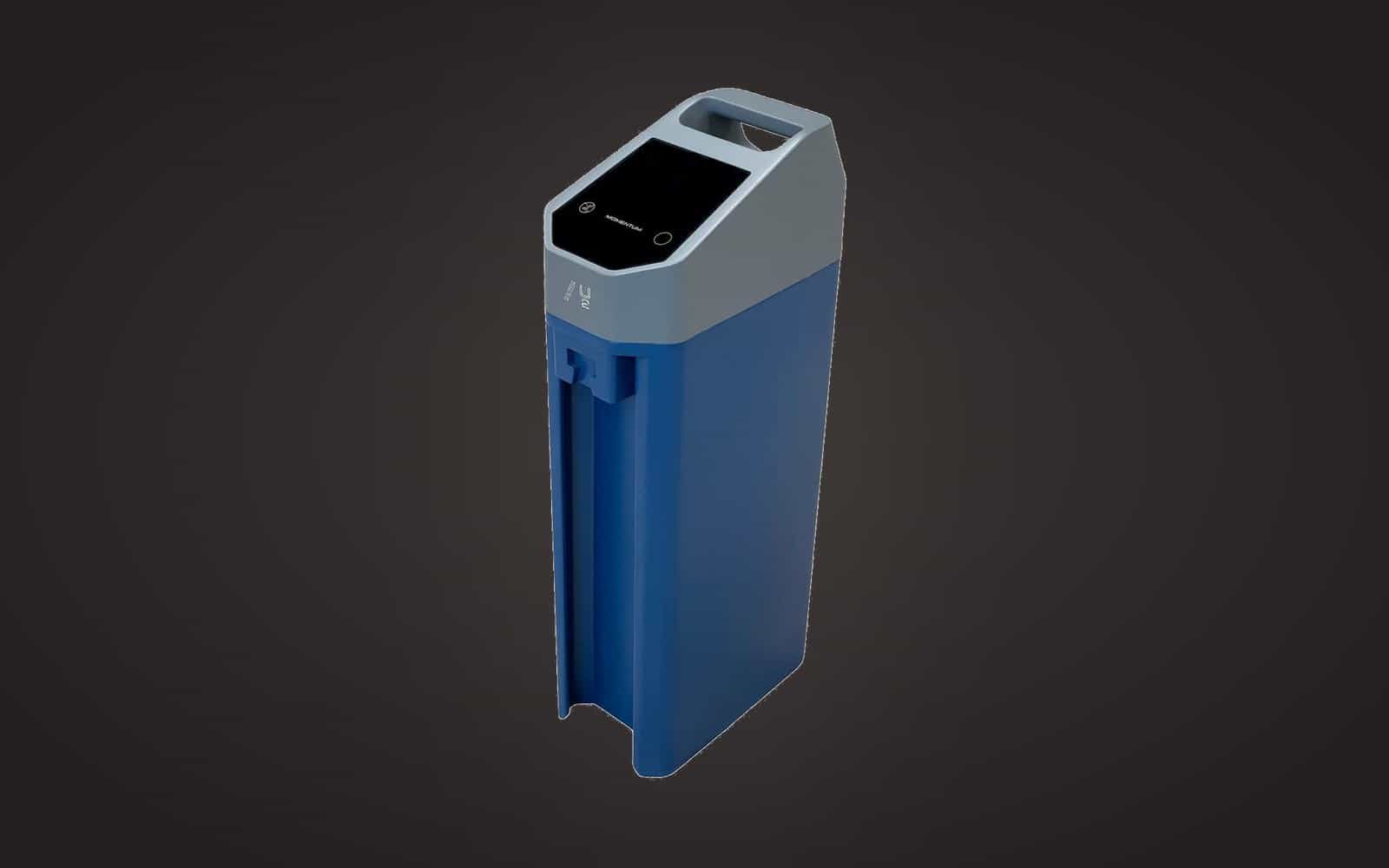
On the U2, the MB-2 unclips and swaps in seconds, without tools. Eight kilos and a handle: you carry it ashore to a socket. A second battery doubles your range without changing anything on the boat, and charges while the other one works.
Match the propeller and shaft length
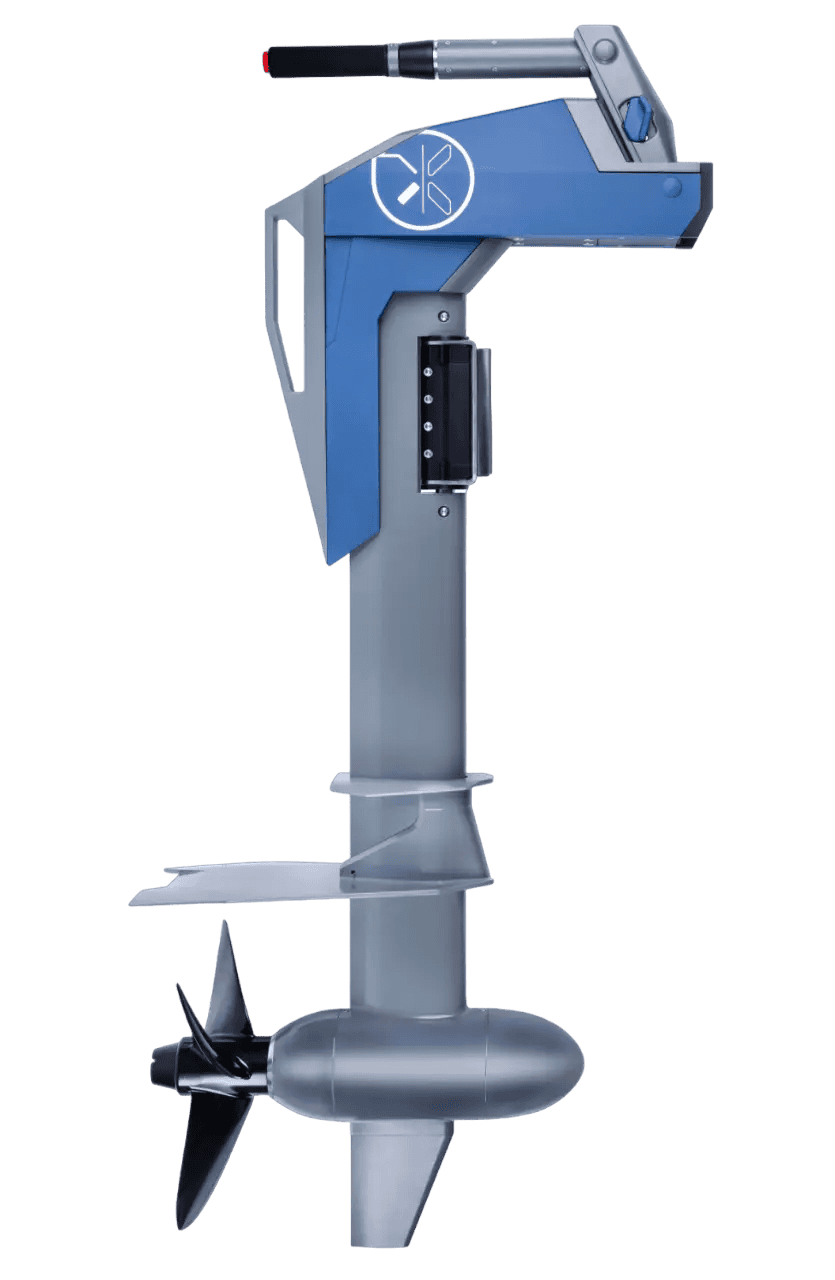
A propeller that ventilates because the shaft is too short, or drags because it is too long, wastes power constantly. The M10 comes in three shaft lengths (39, 52 and 64 cm) and the U2 in two, precisely so the propeller works where it should.
Charge at every stop
The quiet advantage of electric: charging happens while you do something else. A pontoon socket over lunch, and the afternoon starts on a fresh battery.
Frequently asked questions
What range do I need for a full day afloat?
At cruising pace — around 3 knots — a U2 with an MB-2 lasts close to ten hours: a full day of anchoring and shuttling. For faster or longer programmes, look at the M10 and its larger battery.
Can you run out of battery at sea?
The display shows remaining range continuously, in hours and miles, recalculated at your current speed. Running flat is therefore far more predictable than running out of fuel: you see it coming hours ahead, and slowing down pushes it further away.
How long does charging take?
It depends on the battery and the charger. The useful order of magnitude: a night on the pontoon is always enough, and a lunch stop returns a meaningful share of the charge.
Does range fall off over the years?
Like any lithium battery, yes — slowly, and in proportion to cycles. The habits that preserve it are simple: do not leave it empty for months, store it part-charged out of season, and never charge it frozen.
In short
The range of an electric motor is not read off a spec sheet: it is decided at the throttle. One knot less can turn an hour out into a whole day. It is a different way of boating — and for many people, closer to what they were looking for in the first place.
To test these figures against your own boat and programme, nothing beats a sea trial: find a Momentum dealer near you, or get in touch.